


Curb stoppers (also called parking blocks or wheel stops) are the concrete or rubber blocks at the front of a parking stall. They're what keeps a driver who misjudges the brake pedal from putting a bumper into the wall behind them. Cheap to install, and a lot cheaper than repairing structural damage or dealing with an insurance claim over what got hit. ArtForm Construction supplies and installs curb stoppers throughout Edmonton for commercial and industrial properties. If your property already has curb stoppers that need replacing or resetting after a rough winter, we handle install-only work as well.
Edmonton winters take curb stoppers apart. Plow trucks hit them repeatedly from October through April, and salt and sand grinding under tires wear the yellow paint off well before spring. Concrete outdoors in this climate also eventually cracks from freeze-thaw whether it takes a direct hit or not. Most commercial lots reach visible damage after two or three winters. At that point full replacement typically runs cheaper than trying to repair a cracked concrete block. That climate reality shapes the choices in every installation we do. Material has to fit the traffic pattern. Anchor depth has to handle the plow load. The stalls taking the most punishment need the tougher setups
Three main materials get used. Which one fits your property mostly comes down to two things: how aggressive the snow removal is on the lot, and how the property manager wants to split spending between upfront cost and long-term durability.
The most common choice, and still the default on most Edmonton commercial lots. Standard precast blocks are 6 feet long, 4 to 6 inches tall, 8 to 10 inches wide, and weigh 250 to 300 pounds. Cheapest option per unit, and they anchor solidly into either asphalt or concrete pavement. Where they fail is under plow impact. The blades catch them at the wrong angle and the concrete cracks right at the anchor points where the rebar concentrates the stress. Alberta freeze-thaw also eventually works on any concrete left outdoors regardless of whether it ever takes a hit. On a typical Edmonton commercial lot we usually see five to eight years before a full replacement makes sense
Rubber stoppers are recycled tire rubber pressed into shape. They weigh 30 to 50 pounds each, which is a fraction of what concrete comes in at, and that makes them easier to move around during install and easier to reposition if the lot ever gets reconfigured. More importantly for Edmonton, they don't crack when a plow catches them. The rubber compresses and bounces back instead. Cost per unit is higher than concrete, but on lots that see heavy winter maintenance the rubber tends to pay back the difference over five to ten years because it just doesn't need replacing as often.
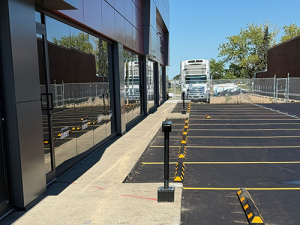
Recycled plastic is the lightest option and the cheapest to ship, which matters if the property manager is buying stoppers by the pallet. Where plastic works is on lots or zones where visibility is the priority and durability is secondary. Marker positions for reserved stalls, temporary layouts, and areas that don't see much plow traffic are the typical use cases. On main entry drive lanes and heavy-traffic zones we usually push clients toward rubber or concrete instead.
Curb stopper installation itself is fast. A two-person crew can typically set 50 to 80 stoppers in a working day once the layout is confirmed. What takes the actual planning time is the layout and anchoring decisions upfront, not the physical work of placing each block.
Snow plows are the biggest single threat to any curb stopper installation in this city. Blades catch the exposed face of concrete stoppers and crack them right at the anchor points, where the rebar concentrates the stress. Paint wears off within a single winter from salt and sand grinding under tires. And freeze-thaw works on any concrete surface eventually. Rubber survives all of it better, which is why we push clients toward rubber for most heavily-plowed commercial lots even though the upfront cost is a bit higher than concrete.
Anchoring depth matters more here than in warmer climates. A curb stopper anchored with 8-inch rebar into asphalt will lift out of position after a couple of freeze-thaw cycles. We drive 12 to 18 inches deep on asphalt installations, which holds through the winter.
On lots with very aggressive snow removal (big-box retail parking, industrial yards, hospital campus lots that run through the winter), we sometimes recommend setting the stoppers back 12 to 18 inches from the front edge of the stall. That way plow blades pass in front of the stoppers on every pass instead of catching the exposed face.
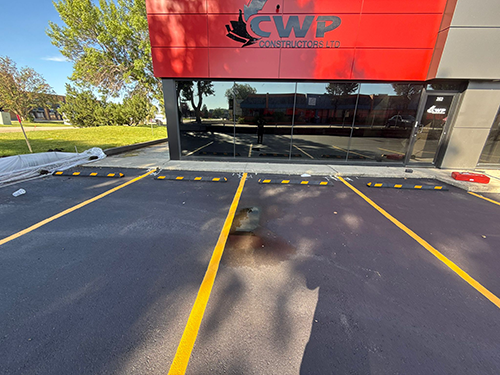
If you need curb stoppers on a parking lot or industrial property in the Edmonton area, get in touch. We'll come measure the site, count the units required, and walk through which material and anchoring approach makes sense for how the lot actually gets used. Then a firm quote before any work gets booked. Install-only projects work exactly the same way. We just skip the supply portion of the quote when you already have the product on site.